
LUDOVICO CARDI (known as IL CIGOLI) 1559-1613
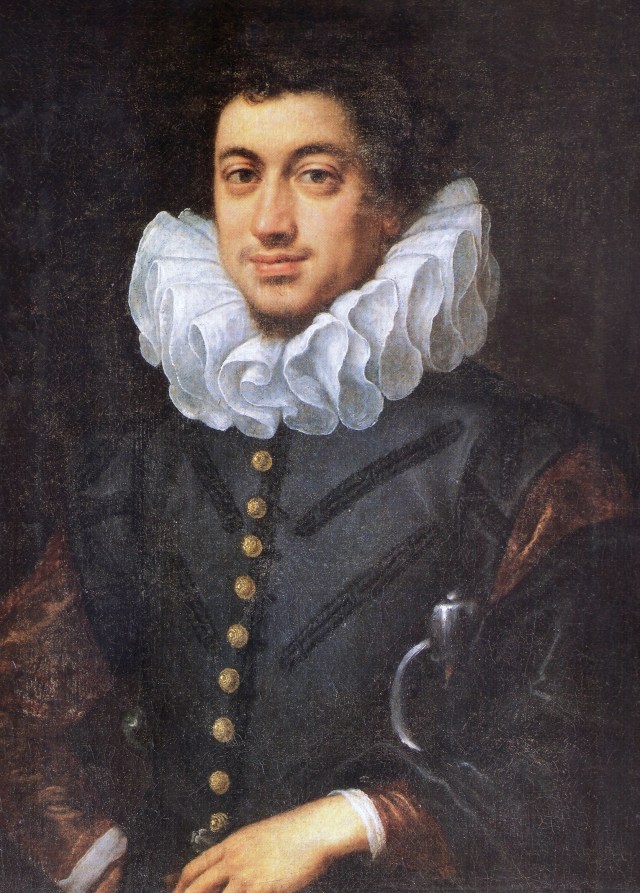
Portrait of a Young Knight (1594)
Oil on canvas (78 x 62 cm)
Palazzo Pitti, Florence
The Florentine artist Ludovico Cardi, better known as Il Cigoli was a pupil of the late Mannerist painter Alessandro Allori (1535-1607) and of the architect Bernardo Buontalenti (1536-1608). He was born in Cigoli, a small village near San Miniato, and became known as “il Cigoli” because he signed his pictures with this nickname. He also studied the work of Correggio and Federico Barocci and was influenced by the Venetian innovations brought back to Florence by Passignano (1559-1638). The innovative nature of Cigoli’s style is evident even in his early work, particularly in his drawings, which combine Florentine attention to detail (especially in his academic exercises on the nude) with a strong sense of colour derived from the Venetian school.
By the 1590s Cigoli’s ability to create complex works of grandiose articulation and movement – works that anticipated the dynamism and liveliness of the Baroque – was evident. From the Heraclius Carrying the Cross (Church of S. Marco, Florence) and The Stigmata of Saint Francis (Uffizi, Florence), we come to the work that has been judged the masterpiece of the period: The Martyrdom of St. Stephen (Palazzo Pitti, Florence) painted in 1597 for the church of the Convento delle Clarisse di Montedomini. This picture, with its vigorous composition and colour, must have been well known to Rubens, who must have seen in it some of the most advanced ideas of the time, ideas that heralded a style that was, dynamic, modern and naturalistic and yet remained faithful to the great Florentine figurative tradition.
When he painted the Portrait of a Young Knight, a picture that represents a lesser-known aspect of his work, his painting had already passed through its formative phase of Allori’s studio, which contributed to Cigoli’s rapidly growing reputation. The portrait also contains elements that must have appealed to Rubens. The warm tones of the flesh, the rich mixture of colours and the psychological immediacy and human vigour of the subject appear to anticipate his Portrait of Gaspard Schoppius also in the Palazzo Pitti and the subject of another post of mine; here is the link: https://oldmasterspaintingscom.wordpress.com/2018/04/29/portrait-of-gaspard-schoppius/
 Old Masters