
PETER PAUL RUBENS (1577-1640)
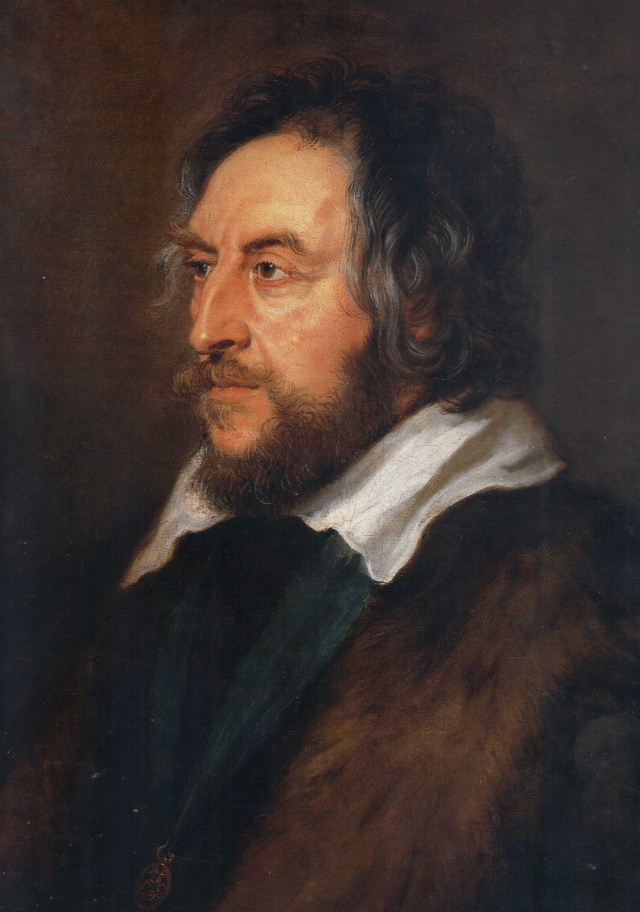
Thomas Howard, 2nd Earl of Arundel (c. 1629)
Oil on canvas (67 x 54 cm)
National Gallery, London
To enlarge the picture, right-click on it, then “Open in a new tab”
Within the different genres covered by the Old Masters, portraiture is my favourite. In the hands of its finest practitioners like Tiziano, Rubens, van Dyck, Velazquez, Roslin and Reynolds we not only have an excellent likeness, but we also have a revealing portrait of the sitter’s character. Thanks to the happy union of its aesthetical qualities and its psychological value, the finest portraits confer to their sitters the highest reward humans can aspire to: immortality
Rubens is one of my favourite painters, he not only practised almost all of the genres, but he excelled in each and every one: portraits, religious, historical or mythological subjects, allegories, and landscapes, all have the imprint of his excellence. The portrait in question here is one of his finest. The character of its illustrious sitter adds to it a particular importance. Thomas Howard, 2nd Earl of Arundel (1585-1646) was one of the most cultivated men of England in his time. He was educated at Westminster School and Trinity College, Cambridge. His inquisitive mind and his taste for the fine arts made him a first-class connoisseur. On April 18th, 1604, he was restored to his father’s earldom of Arundel and to the baronies of his grandfather, the 4th Duke of Norfolk.
With the restoration of his titles and privileges came the means to build up a magnificent collection of art and precious manuscripts. Horace Walpole rightly called him “the father of Virtu in England”. Arundel’s sculpture collection, known as “the Arundel marbles” was the finest collection of Classical statuary in England in its time; it can be admired today at the Ashmolean Museum in Oxford. His equally magnificent collection of drawings by Leonardo da Vinci, Parmigianino, Holbein, Wenceslaus Hollar and Dürer, among others is now at the Royal Library at Windsor Castle.
The present portrait was painted in England during Rubens’ visit in 1629. The Flemish master took the opportunity of copying several paintings by Tiziano in the Royal collection at that time. As he and the Earl of Arundel were kindred spirits a firm friendship ensued and Rubens portrayed him twice, the first one, a life-size portrait in armour, is at the Isabella Stewart Gardner Museum in Boston, the second (the painting discussed here) is one of Rubens most spontaneous and powerful images he ever made. The strong personality of the Earl is apparent in his countenance. He indeed had an imposing figure and personality, according to Edward Hyde, 1st Earl of Clarendon: “He had nothing martial about him but his presence and looks.” The Earl is simply dressed and wears the Order of the Garter.
Rubens also kept a portrait of Arundel in his own house, and it is listed in his estate inventory of 1640. This and other portraits of “famous men” may have been kept as templates in case of future demand for such works. However, the inventory also lists likenesses of many people with whom Rubens had a close relationship, such as the Marchese Spinola, Peiresc, and Marie de Medici, so the portraits may also represent those whom the artist esteemed.
 Old Masters