
PETER PAUL RUBENS (1577-1640)
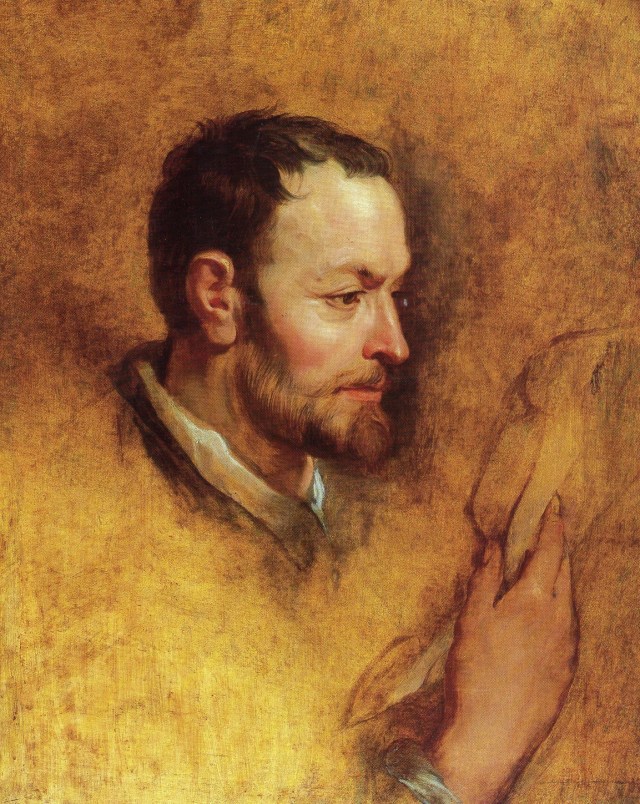
Nicolaas Rockox
Oil on wood (56 x 65 cm)
To enlarge the picture, right-click on it and “Open in a new tab”
Rubens was one of the greatest, most energetic and most fruitful artists whose output, in its variety, extent and quality, has rarely been achieved by any.
Although Peter Paul was born in Germany the Rubens family came from Antwerp which they had to abandon due to religious strife. They would not return until 1589. His training and career took him all over Europe, first to Italy in 1600 and from then, until he returned to Antwerp and married Isabela Brandt nine years later, he visited on official business or lived in Mantua, Genoa, Madrid, Roma and Milan. The major influence in his career was the Italian masters: Michelangelo, Titian and Caravaggio.
The workshop which Rubens set up for his assistance, to enable him to achieve his enormous production of work, attracted artists of the greatest talent, like the young van Dyck. Rubens would make sketches of a subject and, after help from his assistants, he would invariably finish the painting himself. He painted decorations on vast areas of ceilings and walls of churches and palaces in Antwerp, London, Paris, and Madrid. In addition, he produced countless altarpieces, portraits, landscapes, hunting scenes, religious pictures, scenes from history and classical myths, tapestry designs and book illustrations.
These two sketches, of a head and an unconnected hand, suffered from overpainting which attempted to make them belong to the same figure. However, recent cleaning has revealed their true nature and confirmed that they are studies for the portrait of Rockox now at the Fine Arts Museum of Antwerp. This is one of a three-part devotional painting, dated 1613-15, which, by tradition, would include portraits of the donor and his wife
Nicolaas Rockox, born in 1560, was a leading citizen of Antwerp. When in his early 50’s he commissioned Rubens to paint his portrait and that of his wife. They had been friends since 1609, in the finished painting he is shown as a man of substance with a ruff collar and a fur-lined gown.
This oil sketch concentrates, particularly on the head. The extraordinarily high quality of it proves that Rubens always painted the heads and hands himself. Note the intense gaze of the eyes and the delicate detail of the veins in the temple.
 Old Masters