
POMPEO BATONI (1708-1787)
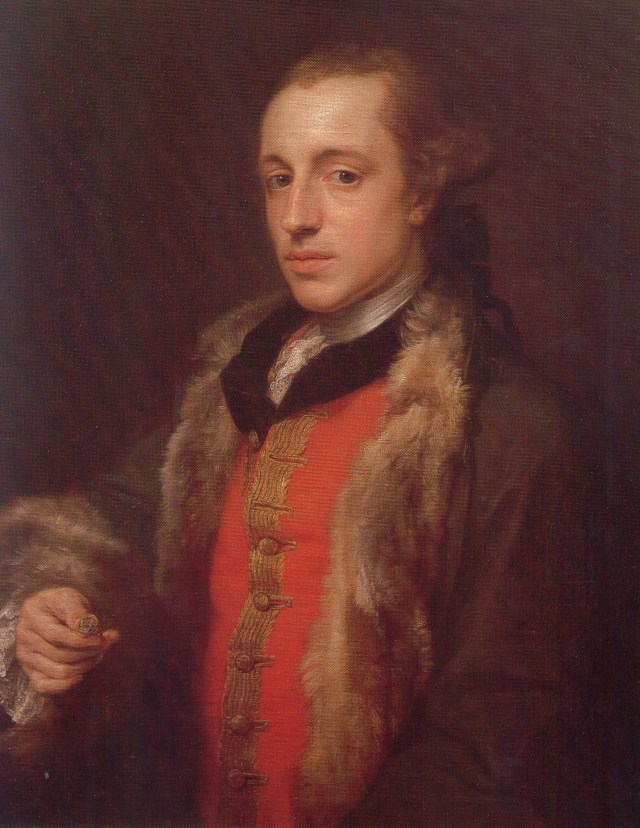
Henry Hutchinson O’Hara (1763)
Oil on canvas (74 x 61 cm)
Private collection
Born in Lucca, Tuscany, the son of a goldsmith, Pompeo Batoni came to Rome when he was 21 and remained there for the rest of his life. He became the leading Italian painter of his generation. He specialized in portraits of the European elite of his time. He was particularly popular among the British aristocratic travellers conducting their Grand Tour. To the British grand tourists, it was almost unthinkable to return home without a portrait by Batoni. He also produced large altarpieces and historical and religious paintings, they all show the same exquisite colouring and the impeccable, enamel-like finish that makes you wonder if they have been painted on copper instead of canvas.
The O’Hara family estate was Craigbilly in the county of Antrim, in the north of Ireland. We know that Henry left England with a companion called McKinlay (perhaps his tutor or doctor) in 1762. He died the next year in Rome a few weeks after having sat to Batoni for his portrait. On the back of the painting, there is a label that reads: Henry Hutchinson O’Hara, son of Colonel Henry O’Hara MP and Frances, his wife, daughter of the Rt. Rev. Bishop Hutchinson died in Rome, in June 1763, aged 28. Artist: Pompeo, Rome.
The sitter’s expression is rather melancholic as he looks at the viewer; in his right hand, he holds an ancient Roman cameo. The gold-braided red vest and the fur-lined coat are standard props that reappear in other portraits by Batoni. The colouring, especially the flesh tones, is faultless. Batoni’s extraordinary skill in rendering fabrics and fur is particularly evident in the depiction of the latter, achieved by soft and precise brushstrokes.
 Old Masters