
JOHN SINGLETON COPLEY (1738-1815)
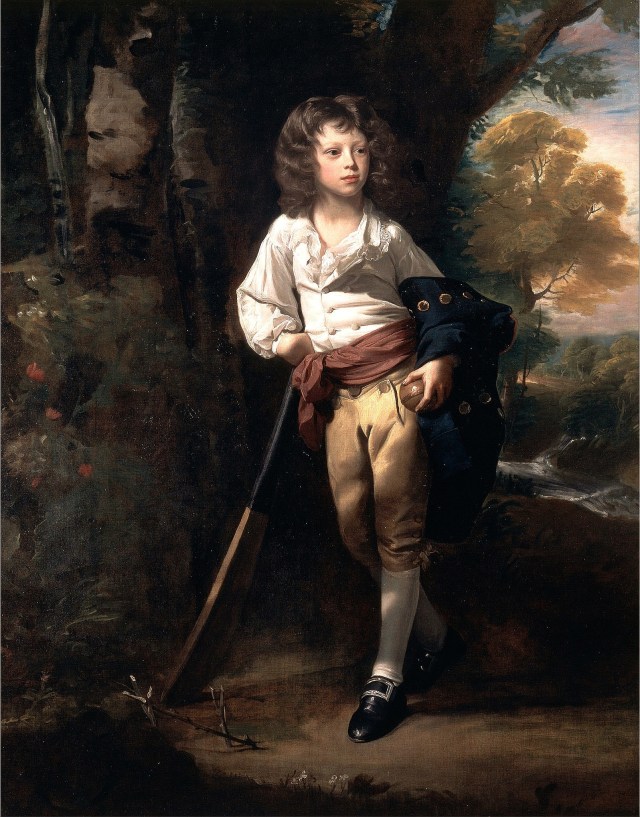
Richard Heber (1782)
Oil on canvas (166 x 130 cm)
Yale Center for British Art, Yale, Connecticut, USA
To enlarge the picture, right-click on it and “Open in a new tab”
Copley was an Anglo-American painter who achieved notoriety in his home town of Boston through hard work and precocious natural talent. According to his son, he did not have teachers of any kind. Before he reached twenty he was already quite popular among the wealthy citizens of Boston whose portraits he painted. Copley was also the first known American artist to work with pastels in which he excelled. He became well-known in English artistic circles thanks to his painting A Boy with a Squirrel (1766) which he sent to England for the yearly exhibition of the Society of Artists. The painting was received by Benjamin West the popular American painter and praised by everyone. Copley was already a celebrity in Boston and, having married into the local gentry, was living like a gentleman. In 1774 he decided to accept West’s invitation and sailed for England. The first twenty years were happy ones with a successful practice; he produced portraits and large historical pieces. From 1800 onwards his health began to decline and was subject to fits of depression, he was forced to work to keep the debtors at bay. He died in 1815 leaving his family heavily in debt, a consequence of his extravagant habits.
Leaning nonchalantly on his bat and holding his jacket in a casual fashion the young Richard Heber is the ideal image of an English sportsman. The idea of the country gentleman as a lover of outdoor pursuits was already popular in the late XVIII century and numerous paintings documented such a trend. Despite the references to cricket in the portrait, there is no record of any athletic exploits by the young Heber; what we know is that he was an avid reader and book collector. Succeeding on the death of his father in 1804 to large estates in Yorkshire and Shropshire, which he considerably augmented, he forthwith devoted himself to the purchase of rare books. He used his huge fortune to build up a library that was one of the largest in Europe. His collection grew to such a size that it overran eight houses, both in England, and the Continent. He owned at least 150,000 volumes; probably more. It is estimated to have cost over £100,000. After his death in 1833, his English collection alone, estimated in 113.195 books, was sold fetching more than £60,000 (1); it took 216 days to sell all the books. Heber has been credited with the saying: “No gentleman can be without three copies of a book, one for show, one for use, and one for borrowers”
Copley shows here his skill as a portraitist, the pose of the sitter is elegant and yet casual. The dappled light effect is brilliantly done. The landscape in the background is not depicted in the manner of Gainsborough or Reynolds, that is, in a sketchy form, but clearly, according to Copley’s realistic vein.
(1) To give an approximate idea of the enormous amount of money that £60.000 represented in 1833, its equivalent in today’s currency (2023) would be near £8.810.000
 Old Masters