
CLAUDE JOSEPH VERNET (1714-1789):
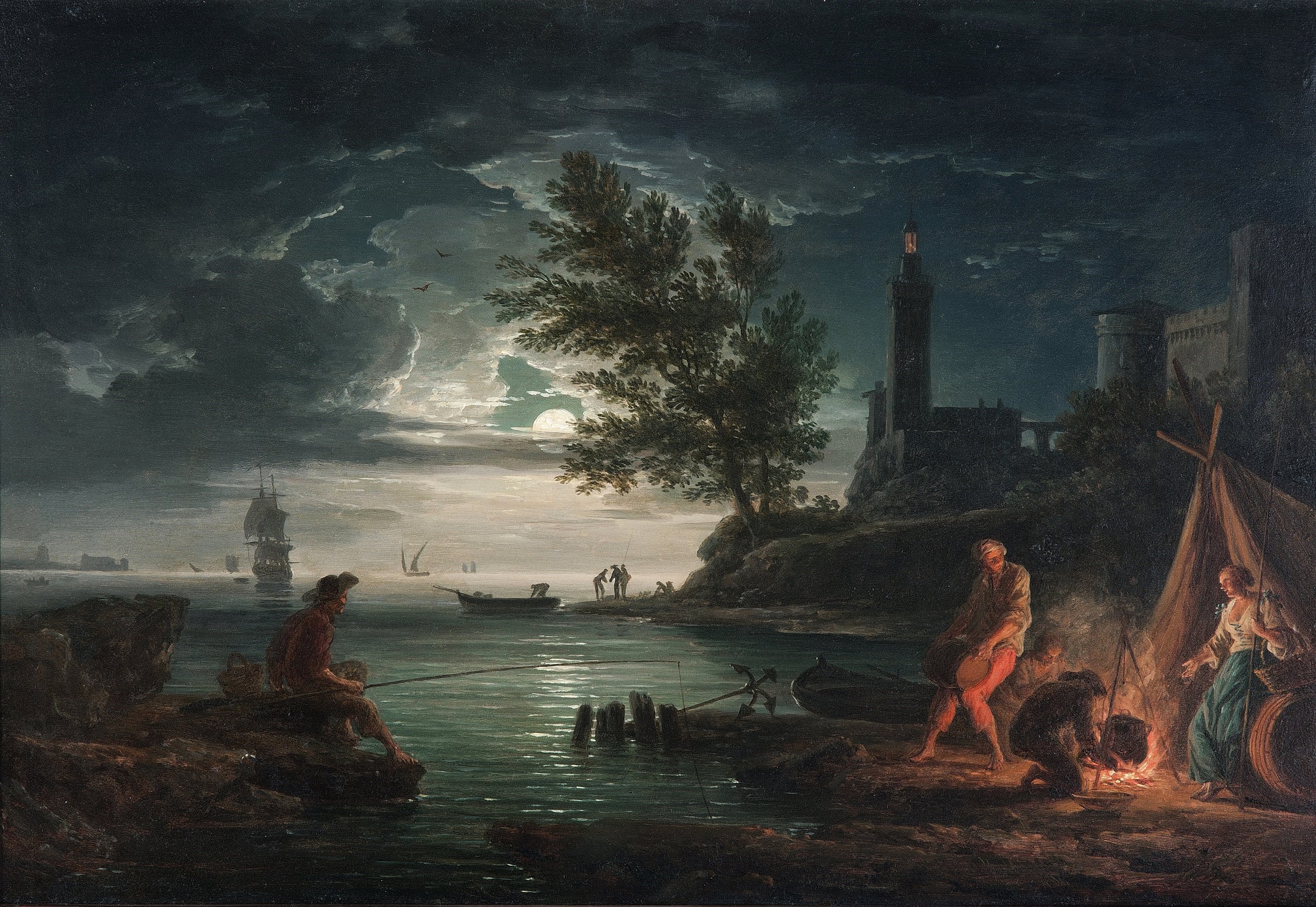
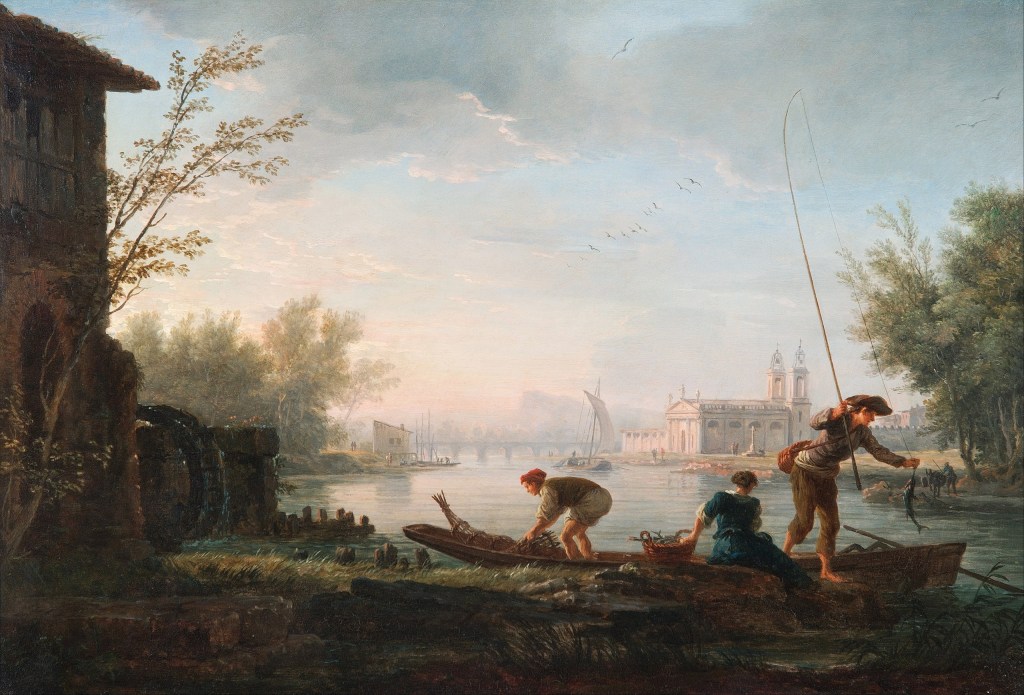
Morning and Night (c. 1757)
Oil on copper (29,5 x 43,5 cm)
Art Gallery of South Australia, Adelaide
To enlarge the images, right-click on them on open in a new tab
“It would be difficult to cite, before M. Vernet, a painter who has understood as well as he, the variety of Nature and the diver’s effects of light” These were the words of a critic at the Salon of 1757 where Vernet presented these beautiful paintings on copper among others.
These pictures were part of the series The Four Times of Day a subject that Vernet was to make his own; this theme was popularized in all media from prints to snuff-boxes, and Vernet returned to it throughout his career.
Why was Vernet, a famous artist overladen with commissions for large and lucrative canvases from the French and the British aristocracy, tempted to paint on copper? Was it a fashionable support? Or was he responding to the particular preference of an important patron? I am inclined to the second hypothesis; if we look into the extraordinary oeuvre of Claude Joseph Vernet, which amounts to nearly 2,125 paintings we shall find that only 25 were executed on copper.
Although initiated into the art of painting in his native Avignon, it was his stay in Rome that would turn him into a mature artist with a style of his own. Upon his arrival in 1734, he carried out the classic studies after the Antique but he also had the opportunity of seeing the works of Claude Lorrain and of his contemporary Giovanni Paolo Panini (1691-1765); the latter had developed a style of painting based on what is known as the Classical landscape, it consisted of figures among Roman ruins set in an imaginary landscape; this made him very famous among the visitors carrying out the Grand Tour.
It was in Rome, where he would spend the next twenty years, that Vernet began to paint on copper. He had the opportunity to see the works of great masters of the XVIIth century, such as Paul Bril, Herman van Swanenvelt and Jan Breughel I. He also met artists like Andrea Locatelli, Francesco Trevisani and Sebastiano Conca who painted on copper; but it was the figure of Claude Lorrain who would be Vernet’s most important, and enduring, influence in his work.
In these works, we can appreciate Vernet’s skill in rendering the atmospheric effects of a hazy morning or the cloudy moonlit landscape, in the latter is particularly noteworthy the glowing colour of the fire on which the fishermen are preparing their supper. Naturally, the medium lent itself to the luminosity that Vernet strived to achieve.
 Old Masters