
GODFRIED SCHALCKEN (1643-1706)
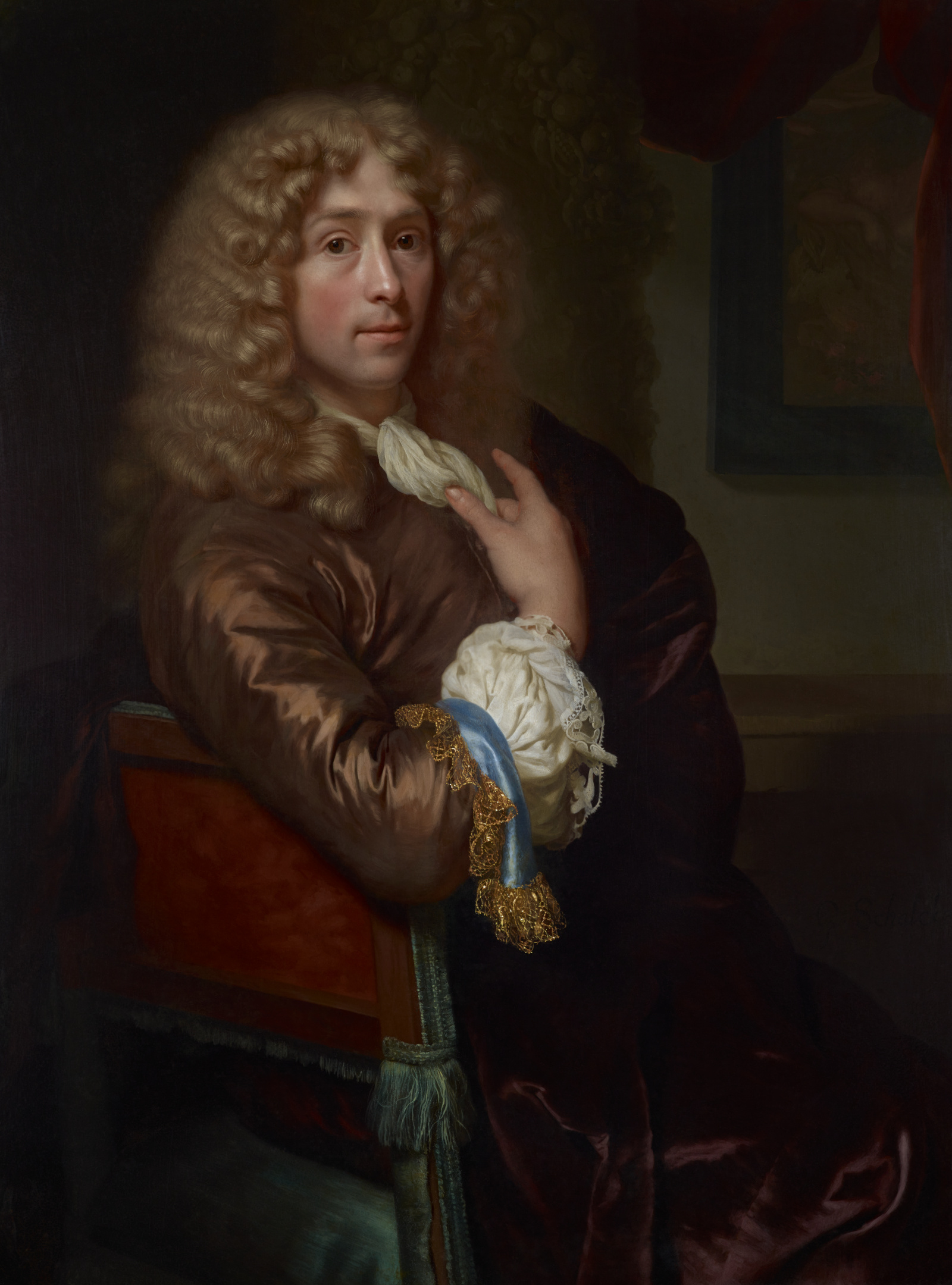
Self-portrait (1679)
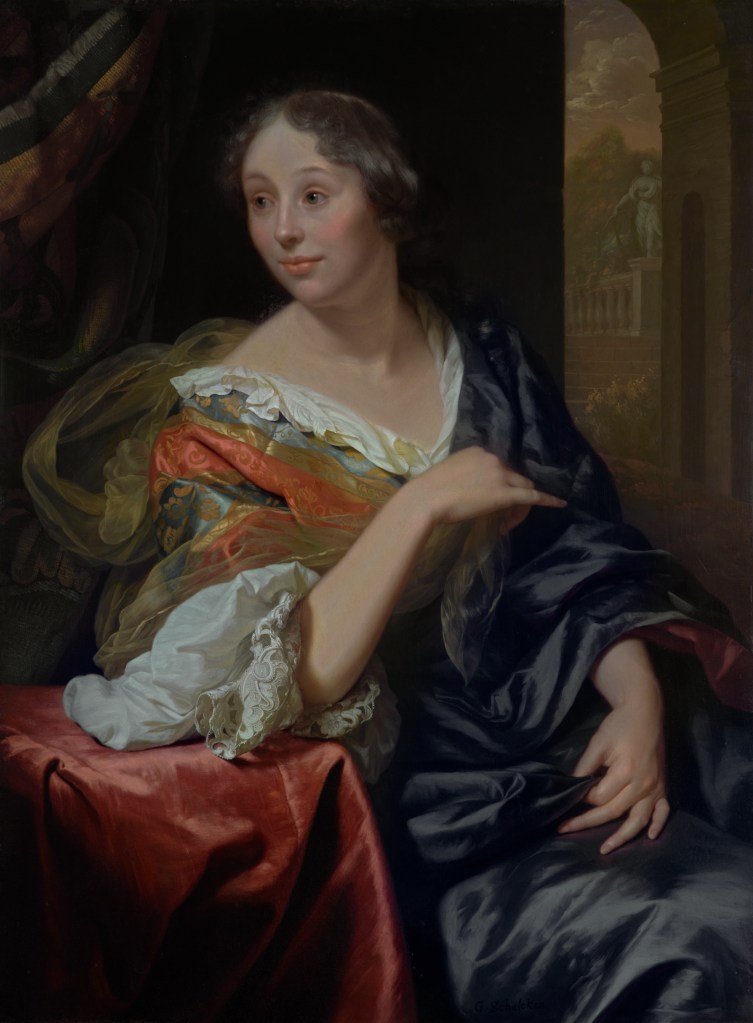
Portrait of the Artist’s Wife (1679)
Oil on copper, 41,5 x 30,5 cm
Prince of Lichtenstein’s Collection, Vaduz
To enlarge the pictures, right-click on them and “Open in a new tab” (*)
(*) The images have been kindly provided by the Princely Collections of the House of Liechtenstein. I recommend to visit their website: https://www.liechtensteincollections.at/
Godfried Schalcken was born in Made near Breda in 1643 and moved to Dordrecht in 1654; two years later he became an apprentice to Samuel van Hoogstraten (1627-1677) until 1662 when he went to study with Gerrit Dou (1613-1675). After 1680 Schalcken gained an international reputation based mostly on his glowing candlelight scenes. Thomas Platt, the unofficial English agent of the Grand Duke Cosimo III of Tuscany, described the artist as “un pittore olandese assai famoso” (1) In 1692 he moved to London where he executed numerous portraits and genre paintings. Five years later he returned to the Netherlands and settled in The Hague, where he died in 1706.
These two exceptional portraits were executed on the occasion of the marriage of Schalcken to 17-year-old Françoise van Diemen, daughter of a rich officer of Breda; the artist was 36-years-old at that time. Following the heraldic tradition, the man is presented on the left and the woman on the right. The artist rests his right arm over the back of a chair, in a position invented by Frans Hals. Schalcken’s head, crowned with thick and curly blond hair, is turned towards the viewer in an invitation to enter his world. Looking at him his young wife sets her right elbow on a balustrade covered with a red drapery. Shown in three-quarter length the couple is richly dressed reflecting the painter’s high status and wealth. Schalcken’s copper-coloured housecoat with cuffs lined with blue satin and trimmed with gold lace portrays him as a fashionable gentleman rather than an artist. Françoise’s low-cut brocade dress and her dark red-blue shawl contrast with the porcelain quality of her complexion; her right arm raised across her chest reveals the exquisite quality of the lace that decorates her dress.
Schalcken surrounds his bride and himself with many allusions to their union. Both spouses carry their right hand to the heart, confirming their promise of mutual love. Behind the artist, a garland of fruits and vegetables, a symbol of fertility, climbs on the column, and the painting of a nude woman asleep, probably Venus, hangs on the wall. Similarly, behind Françoise, an opening into a garden reveals a statue of Diana. The allusion to the two goddesses. Diana in women’s portraits and a sleeping Venus in men’s portraits generally referred to chastity.
(1) “A very famous Dutch painter”, quoted by Walter Liedtke (1945-2015) in “Liechtenstein: The Princely Collections” (p. 271, New York, 1985). Catalogue of the magnificent exhibition of the same name hosted by the Metropolitan Museum of Art of New York from October 1985 to May 1986.
 Old Masters